

Infant statehood
The contribution of institutionalized segregation in schools to the breakdown of family values

“A time will come when a son will be cheerful to his friend and hostile to his father.”
When I first read this prophesy, the first villain that came to mind was our public school system. That doesn’t mean there are no other contributing factors to why children turn against their parents. Bad parenting is a good example, but they are documented and well-researched while how our public school system is creating a rebellion within the new generation is severely understated.
My own story
I was in the public school system from kindergarten to 9th grade, which was a good chunk of the formative years of my life, or should I say, the whole of my childhood. Because it was the system I practically grew up in, it was my normal. I thought everyone’s childhood must be the same, segregated from the larger community for the sake of a wholesome education. It was not until I homeschooled my first daughter and realized that only four subjects were mandatory in our state, which my daughter could complete in under 3 hours, that I started asking questions. What was the need for kids to spend so much time away from family when it could be done right at home in under 3 hours?
This curiosity to understand why segregation from adults and with other premature same-aged groups was so crucial to a formal education confounded me. What influence does segregation have over a solid education and is it possible to achieve it without being confined like a prisoner with other kids your age who are at your maturity level, your level of experience, and your level of vulnerability? What more did you get out of being with them than with the community of mentors and grown-ups who had the maturity, wisdom, experience, morals and insight that us kindergartners to 12th graders would gather only after many years?
Or was this system designed with all that in mind? After all, there was no segregation in school prior to the industrial era and the importance of elders and mentors and wisdom and experience was a cross-cultural theme that was recognized across the Eastern and Western hemisphere.
Than I looked back at my own time in school and thought about how it shaped my thinking, feelings and personality. I recall lots of peer pressure. I used to be called Dumbo because my ears stuck out and remember asking my physician father if there was any type of surgery that can ‘stitch’ my ears back. I wanted to be saved from the taunts, though I never told him that part. I will add that I wasn’t so innocent myself and quipped back with pretty evil stuff (including expletives) and other that were both demeaning and mean.
Now that I look back, I realize a few things.
Firstly, this wasn’t how I was raised, nor do I think the parents of the bully kids would be proud of their childrens’ bullying me.
But at some point, none of that mattered to us because the adults were not of our world. We school children operated autonomously with our own set of laws. No adult was allowed in, nor was their moral authority binding on us. After all, weren’t they the ones who put us together and then withdrew to their own worlds?
The second thing I realized is that by separating us from adults for excessively long periods of time, we learned the importance of lack of experience, lack of wisdom, and lack of insight because if any of these concepts were of any importance why would we be separated from the sources of wisdom, experience and insight in the first place? As a result, it was impossible for us to esteem our elders, parents, and adults at large. The one thing they had over us was their wisdom, experience and insight, and since that was of no good, then how were we any less better, or our opinion any less important than theirs?
This segregation was building up an uprising already.
This is not to say adults will always be right and children always wrong, but the immature opinion that is impetuous and driven by raw energy is going to be blind and reckless. There is a reason why the secular Constitution has a law in place that requires every president to be at least 35 years of age before they can run for president. It is a common understanding whether you separate church from state or not that experience and age matters. If that’s the case, then why segregate children from the sources of experience? Can a formal education not be had without it?
Someone may say, “But what about the teacher? They are adults and the supreme authority in the classroom.”
No doubt, but the system limits their authority only to the extent of determining who is and isn’t dumb. The grading system creates a hierarchy within the children that establishes the value of intelligence and something students will compete for to achieve higher grades. As for good character, there is no grading system, therefore, it holds no value. What that means is that if the ‘dumber’ kid is more compassionate, there are no grades to raise him above his peers while the smarter kid will receive higher marks despite his obnoxious behavior. In essence, the system is brewing narcissism by rewarding intelligence while ignoring good character as if being rude, condescending, and hostile is irrelevant as long as you are smart. This is the type of system that creates the elitist, oligarchical class and our modern-day politician that is defined primarily by greed, cunning, and power, and never by good character and higher morals.
In school
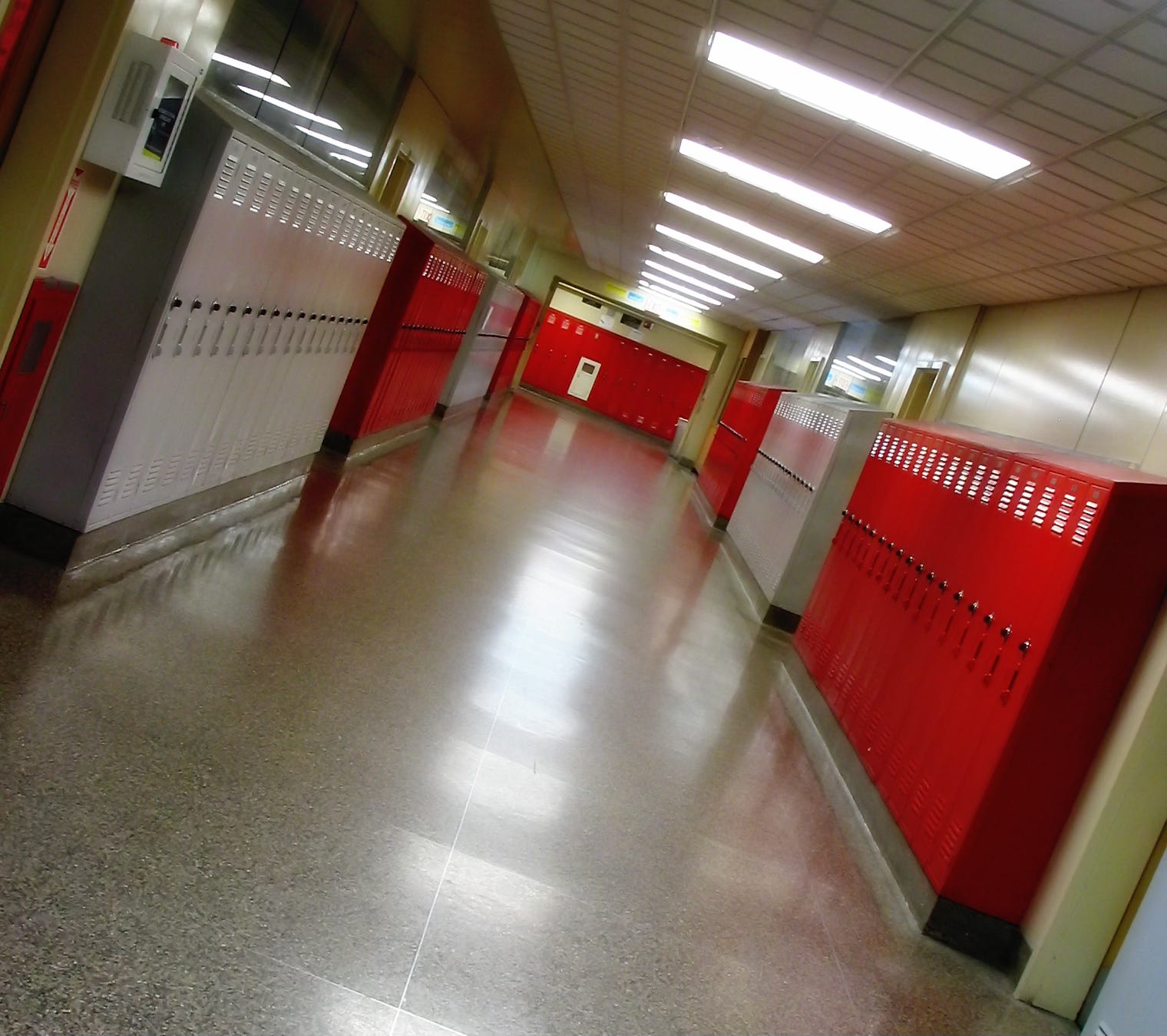
In school, it was the Wild West. Shyness and low self-esteem were weaknesses. You had to be cocky and confident and be good at hiding your vulnerabilities behind a huge performance of being big and bad. The only virtue in this infant state was money, brand names, and appearance. The prettiest, handsomest, the cockiest, and the most confident ruled the day. If you were less pretty or had some other superficial handicap that made you vulnerable, you better fend for yourself like a small fish among hungry sharks.
The institutional segregation that imprisoned us together for extended periods of time formed a timeless interdependence between us in the infant state. This is why you see kids hanging around together after school hours in the malls and other public areas together. Sometimes its online video games. On rare occasions, these bonds can turn dark like the duo Dylan Klebold and Eric Harris who shot up 12 students and one teacher at Columbine High School in 1999.
The micropolitics and identity of this infant state treats adults like refugees or second class citizens in a country. This is where the ‘you don’t understand me’ mindset evolves from. The state recognizes no authority outside of its own and maintains its own semblance of self-identity. Adults are never, ever welcome in this state.
The connection between the members of this infant state is equally utilitarian. They are not genuine or long-lasting, and any sense of compassion, kindness or empathy is generally regarded as a weakness. Relationships are organized around personal expediency and every child with low self-esteem or a handicap is quickly devoured.
As John Taylor Gatto, who taught in the New York State public school system for over thirty years and was named New York City Teacher of the Year in 1989, 1990, and 1991 and New York State Teacher of the Year in 1991, once said, “The children I teach are cruel to each other; they lack compassion for misfortune; they laugh at weakness; they have contempt for people whose need for help shows too plainly….”
The Prophesy
The first thing to remember is that prophesies do not highlight isolated cases but prevalent patterns. For the Prophet (sa) to cite the disintegration of the son-father dynamic, he is actually revealing something much bigger: the ‘generation gap’ crisis and a growing disaffection in the younger generation with the older ones. If the son is intolerant of the father, then how much more respect would he or his peers have for the father’s generation and above, the grandfathers? And then, how open is this generation to receiving inspiration from and learning the wisdom, morals, and insight of the elders that is gleaned from years of experience and observation?
I am not here to advocate for the older generation and their rights. As much as they may cheer me on, but in most cases, they willfully send their children to the very mass-schooling institutions that corrodes the adhesive keeping our families together.
They know too well like the rest of us that schools are not designed to teach respect for elders. The reason we send our children to school is ultimately utilitarian to grant them the necessary tools to achieve economic independence. Education to them is only as valuable as it grants the skills that will raise our prospects for a better life.
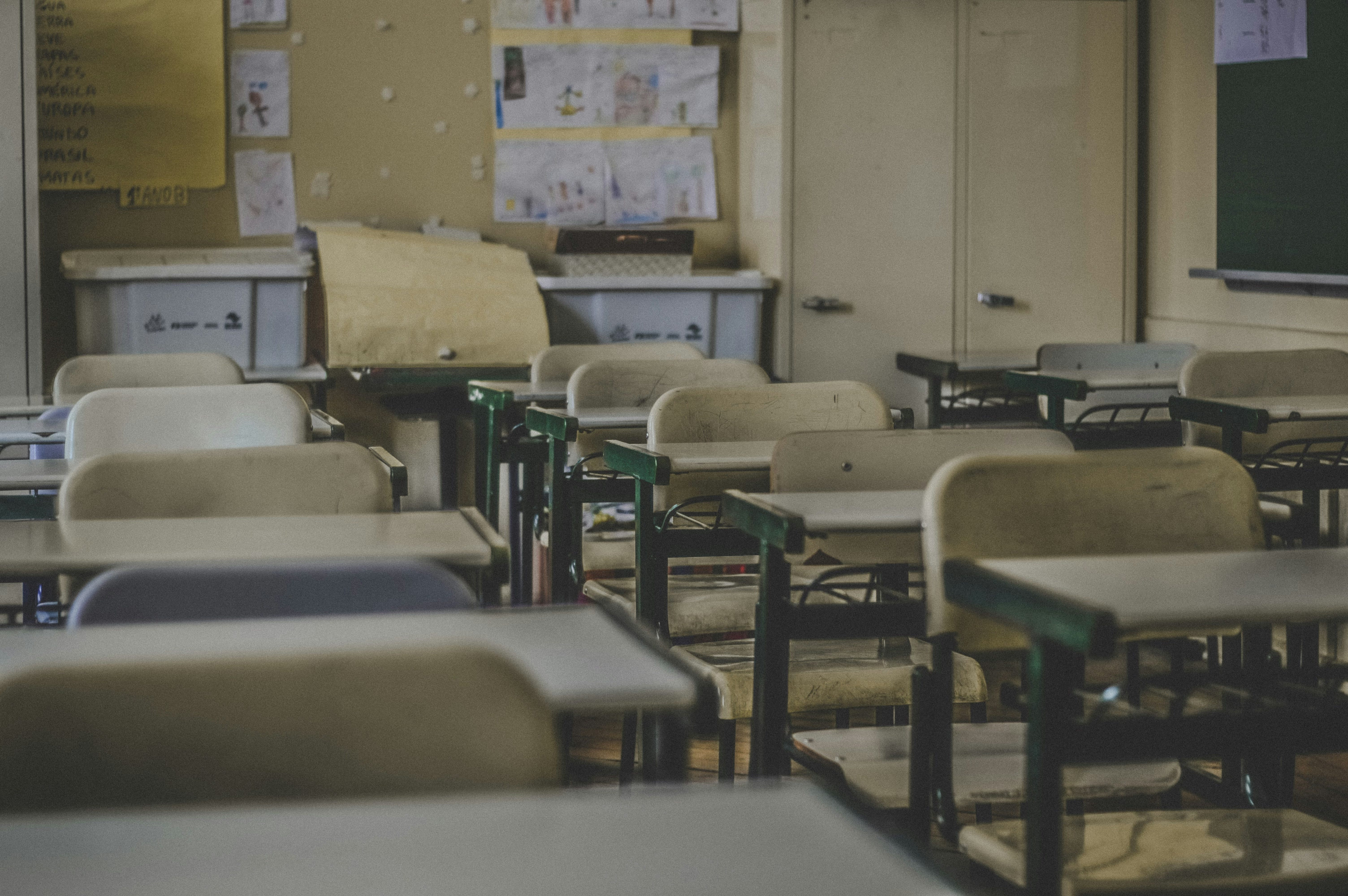
I don’t think anyone will disagree that the purpose of modern education, if my loose definition is correct, is basically sound. It is essentially a means to achieve the greater end of economic prosperity and individual independence.
The root problem lies in the modality and structure of how this formal education is dispensed. And that is where segregation comes in.
Segregation
Segregation sounds like a dirty word for anyone who knows our history. I think we all can recall the separate areas for blacks and whites in public restrooms, restaurants, and every other public venue in the times before the Civil Rights Act of 1964. We are doing it again and this time in schools, but this time on the basis of age.
Children are segregated from adults for about 12 years for about 6-7 hours daily. These 12 years are the formative years of childhood in which formulas, codes and ideas are programmed into a child’s DNA and they are surrendered to mass institutions made up of complete strangers with no personal connection or love to your or my child. Lawmakers, superintendents, principals, and experts are placed in charge of forming or ‘disforming’ the child in a period when they are most vulnerable to change.

As these bonds in the segregated state cure and become more familial, the biological ties at home are compromised especially after the fact that working fathers and mothers have little to spare after a working day. And, let us not forget the age-apartheid walls that are created by mass-segregation of children from adults.
As a result, the breakdown of family units has escalated over the years. In extreme cases, we even come across matricide and patricide. Alarmed, the government took note and funded an academic review of CPV (Child-to-parent violence). Here is what the NLM (National Library of Medicine) said, “Child-to-parent violence (CPV) is an increasing issue globally, leading to serious adverse effects on families. This research aimed to conduct a systematic review and meta-analysis to assess the prevalence of CPV and identify its associated risk factors, thereby enhancing understanding of this escalating global issue.”1
The review highlighted something that is key to the above prophesy: “Subgroup analyses indicated that physical violence prevalence was 10.0%, while psychological violence was significantly higher at 82.6%.”
Psychological violence includes defiance, violent behaviour, and resistance to authority. The famous hadith of Bukhari, “When a mother will give birth to her masteress,” can be understood in the context of the narcissism that is brewed in our school system. Key to understanding how the mother is turned into the slave is the fact that the hadith only mentions her giving birth to the child, and nothing beyond. Maybe this is because the next stage is handled by the school which separates the child from the adult before integrating it into the infant state that collectively empowers its members to be free of reliance on and affection for its biological mentors.
Teachers’ awareness
Teachers are more than aware of how the segregation along age-biases is transmuting our biological relationships, non-family into family and vice versa. John Taylor Gatto said, “The feeding frenzy of formal schooling has already wounded us seriously in our ability to form families and communities, by bleeding away time we need with our children and our children need with us. That’s why I saw we need less school, not more.”2
In another place, he writes, “Yet, it appears to me as a schoolteacher that schools are already a major cause of weak families and weak communities. They separate parents and children from vital interaction with each other and from true curiosity about each other’s lives. School stifle family originality by appropriating the critical time needed for any sound idea of family to develop—then they blame the family for its failure to be a family.”
In general, the vacuum of empathy, compassion and plain kindness in modern culture is proportionate to the individualism that is fostered through the mass-schooling of children in institutions that harbor the culture of children as a separate whole from the adults and depriving them of their experience, morality and wisdom. These are the adults they love when they first enrol, but whom they feel disinclined to love after their schooling is done. Thus, the corrosion of family values.
As for education, it is important no doubt, but it is neither dependent on nor in need of segregation to be imparted.
The purpose of education is essentially to make us better human beings and not more self-reliant human beings. In that case, the idea of mass segregation is a dangerous concept that is widening the rift between the generations and taking us down a scary and dark path.
To prevent against the repercussions of the psychological violence and hostility toward adults that is bred in the school system, it is important to upend the self-autonomous nature of the infant state, which is naturally inclined to a more liberal outlook. This requires a complete makeover of the system. It requires us to center the school system around God, precisely what Charlie Kirk was attempting to do from a Christian perspective, but since the problem is systemic, it requires a complete overhaul.
As a Muslim, I had to choose between coopting my faith while accepting the liberalism entrenched in self-authority, or dropping out altogether.
I took the latter and have never regretted it since.
https://pmc.ncbi.nlm.nih.gov/articles/PMC12001392/
Gatto, J. T. (2017). Dumbing us down: The hidden curriculum of compulsory schooling. New Society Publishers.
I completely agree that public schools today are brewing a culture where grades outweigh morality, and that the system is overdue for serious reform—like you mentioned, the kind of reform Charlie Kirk has prompted and envisioned. And this is not a far‑fetched vision at all. As of right now, 33 states have already begun implementing Freedom of Parental Choice Act, even promoting it through tax credits and scholarship benefits to support any families who want better options where you pay little to nothing depending on your tax brackets. It is a problem well recognized in the past 2 decades and adopted by 66% of the US, this noble cause is mainly embraced by states that genuinely care for their people. The system isn’t completely broken; in fact, there is absolutely real hope for informed parents who want to raise the next generation on high ethics and morality that coalign with family values, religious values, and the religious freedom this nation was founded upon. Strong private schools show that academics and character don’t have to compete when a school’s values are intentional and balanced and uniform as the norm.
From my own experience—three years teaching in a public school district and over a decade tutoring students from Pre‑K to college, including both regular‑education and special‑needs learners, along with my own journey as a lifelong public‑school student—I agree with you and have witnessed firsthand how the system has failed us by prioritizing beauty, popularity, and cockiness over true human qualities. But I’ve also observed that every bully, every drama queen, every “problem child” carries baggage from home. Parents failed first in those early childhood years and continued to fail as their children grew. The Qur’an, the Sunnah, and modern developmental science all affirm the same truth: a child’s core personality and behavioral patterns are largely formed by age four, and by age seven those traits are already well‑established; after that, it’s mostly reinforcement. Surah Luqman and other prophetic stories emphasize early moral instruction, parental guidance, and the shaping of character long before the teen years.
In the formative years of schooling, there are matrices and reward systems for good behavior, ethics, and following rules. And although later grades no longer measure “good behavior” as a formal indicator of success (though they should), schools are still often the only place where these students face any consequences at all. School becomes the only environment offering discipline and accountability—things many parents have completely failed to instill. It’s also the only system that can push students toward self‑realization, helping them understand that their behaviors can lead to delinquency or even jail time in adulthood. At home, there are no such guardrails, which is exactly why their behavior escalates so dramatically by adolescence.
As a SUNY graduate who also completed graduate work from a private institution, I’ve seen this contrast up close: the public school system prek-12 is structured to weed out less productive members of society, which is why the most intense bullying, social hierarchies, and behavioral issues tend to surface there—while higher education institutions for vocational and STEM programs have little to no peer pressure and far fewer of these formative social incidences.
As you mentioned, Teachers aren’t the problem, but the middle to high school is constrained by a structure that rewards test scores over character formation. Teachers are trained to deliver curriculum and rank students by performance, not to cultivate emotional intelligence, ethics, civic responsibility, or the habits that make someone trustworthy and grounded; however, there is no doubt that there are quite some exceptional role model school teachers. I have met many as well as I was one of them myself that put my own pocket money for extra class lab projects, encouraged, promoted as well as rewarded those students that displayed honesty, morality and integrity. School age kids need more than just parents as role models, their teachers that is representing both this world and the next is as essential; youth leaders are also vital in breeding a righteous generation.
Real reform also requires addressing the economic pressures that shape family life. When a 40‑hour workweek no longer guarantees a living wage, a mortgage, or basic stability, parents simply don’t have the time or bandwidth to be involved. This is a generational inheritance from industrial‑era economics—something neither public schools nor government programs have ever solved. For at least two generations, families have been stretched thin, leaving less time for parenting, less transmission of values, and less emphasis on ethics at home. Ultimately, it comes down to how seriously parents take the individual responsibility of passing on morals and discipline.
To drive the point, in today’s society, parents alone are not enough. Schools and families must work hand in hand, because what is taught in school should align with what is taught at home. Greater parent involvement is essential—not to control teachers, but to ensure that the values reinforced in the classroom become societal values, not just private religious obligations one must follow because they believe in a higher power. School is where character can be elevated beyond family and beyond religion, helping children internalize virtues through peers, uniformed community norms, and shared expectations. It’s where children learn that good character isn’t just a “family rule”—it’s a social expectation.
In this century, relying solely on parents—or limiting children to exclusive adult interaction—simply does not work in early childhood. The world is now at a child’s fingertips in ways no previous generation has experienced, and research consistently shows that positive peer reinforcement is one of the fastest and most powerful forms of learning. Parents still play the central role in setting values, but they must also ensure that educators and learning environments respect and reinforce those values.
As children grow and their behavior and discipline become more established, they inevitably encounter influences far beyond the home—not only in school, but in the broader world that is constantly accessible to them. At this stage, parents must remain involved not by sheltering their children, but by preparing them: teaching them the protocols, boundaries, and moral reasoning needed when they encounter foreign or haram influences. Guidance must come before exposure, not after.
And as mentioned, positive mentors and peer influence eventually outweigh parental influence, whether a child is homeschooled or not. Even within Muslim families, values and principles vary widely. A conservative Muslim society still cannot depend on every household to teach ethics consistently or to uphold a shared moral standard. This is precisely why collaboration becomes essential. Schools must work in partnership with families to reinforce what is taught at home, providing a safe, peer‑reviewed environment where character is shaped collectively. In doing so, schools help children succeed in this world through strong character, and prepare them for the next through high morals and integrity.
Only when schools and families operate together can education move beyond being a sorting mechanism and become a true formation process—one that develops whole, grounded, principled human beings.